
Art Form
Pichwai
Nathdwara, Rajasthan · Western India
What It Is
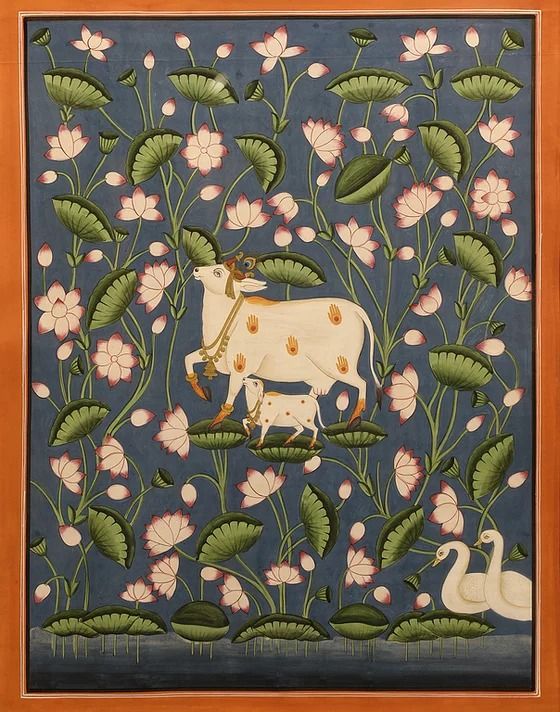
Pichwai paintings are intricate devotional artworks from the temple town of Nathdwara in Rajasthan. Created as cloth hangings behind the deity Shrinathji, these paintings depict various moods, festivals, and seasonal celebrations.
Emotional Qualities
History & Origin
The tradition began in the 17th century when the idol of Shrinathji was moved from Mathura to Nathdwara to protect it from Mughal emperor Aurangzeb's iconoclasm.
Cultural Significance
Each Pichwai corresponds to a specific festival or season in the Hindu calendar. They are not merely decorative — they are liturgical objects that transform the temple space.
Technique
Pichwai paintings are created on starched cotton cloth using natural and mineral pigments. The most distinctive feature is the precise, repetitive rendering of lotuses, cows, and peacocks, each flower painted petal by petal.
Materials Used
Cultural Context
Pichwai art is inseparable from the Pushti Marg tradition of Krishna worship. The priests of Nathdwara needed elaborate backdrop paintings to change according to daily rituals and the 365 festivals of the Hindu calendar.
When This Art Form Works Best
Home temples and sacred spaces
Devotional meditation
Luxury heritage interiors
Seasonal and festival celebrations
How Our Artists Approach This Form
Our Pichwai masters follow the sacred traditions of their lineage, beginning each work with prayer. Every lotus is painted petal by petal with meditative patience — some works take six months to complete.
Featured Works
Examples from our artists
No works listed yet. Be the first to commission one.
Commission this art formArtists Who Practice This Form
Meet the masters keeping this tradition alive
Ready to commission a pichwai piece?
Tell us about your story, and we will match you with the perfect artist.
Start a Commission