
Art Form
Miniature Painting
Rajasthan, Delhi & Kashmir · Northern India
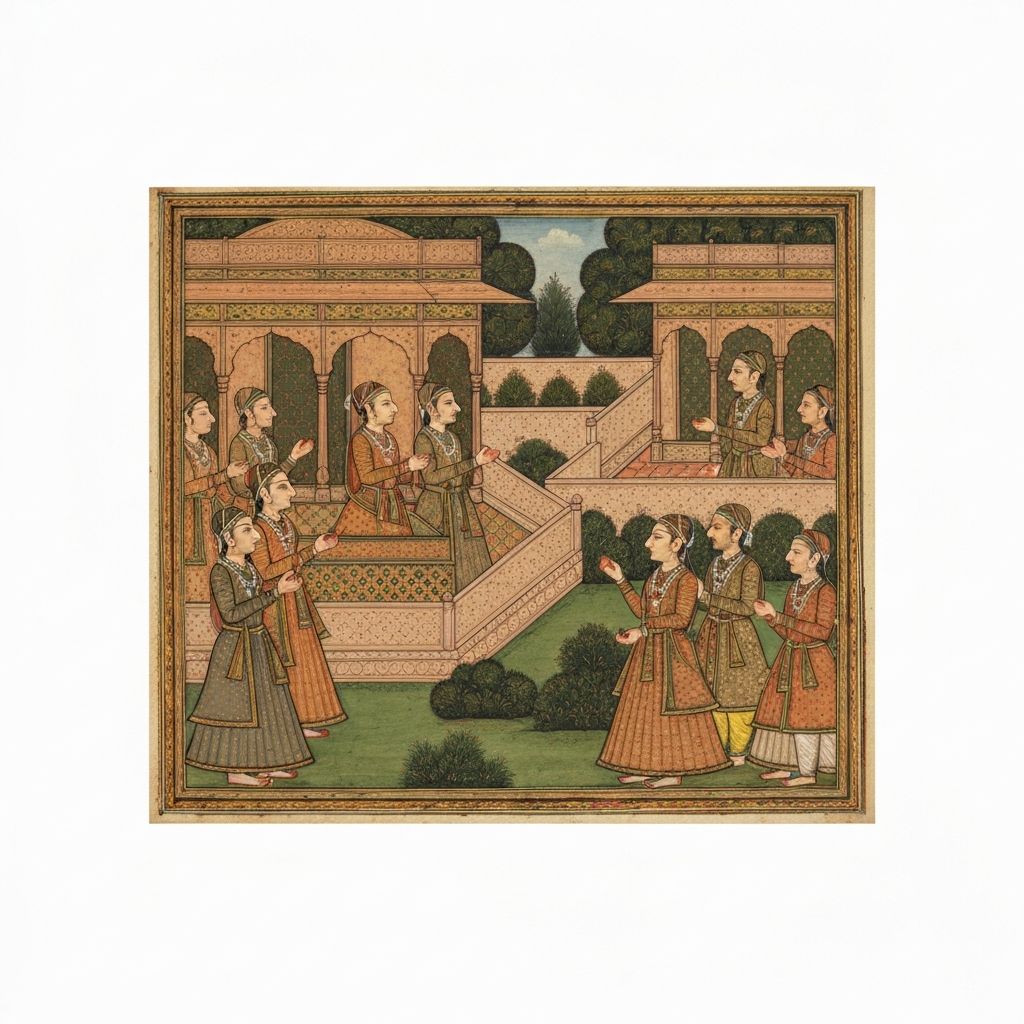
What It Is
Indian miniature painting is an exquisite tradition of detailed, small-scale paintings created with extraordinarily fine brushwork. Developed under various royal courts — Mughal, Rajput, Pahari, and Deccani.
Emotional Qualities
History & Origin
The tradition began with illustrated Buddhist palm-leaf manuscripts in the 9th century and was revolutionized under Mughal Emperor Akbar, who established a royal atelier of over 100 painters.
Cultural Significance
Miniature paintings served as visual chronicles of court life, religious devotion, musical moods (ragamala), seasonal celebrations (baramasa), and romantic poetry.
Technique
Pigments are hand-ground from minerals — lapis lazuli for ultramarine, malachite for green, gold dust for highlights. Brushes are made from a single hair of a squirrel's tail.
Materials Used
Cultural Context
Miniature painting represents the convergence of Persian, Central Asian, and Indian aesthetics. Under Mughal patronage, it became one of the most sophisticated art forms in the world, with each court developing its own distinctive style.
When This Art Form Works Best
Portrait commissions
Family heritage documentation
Intimate personal gifts
Collector's editions and limited prints
How Our Artists Approach This Form
Our miniaturists grind their own pigments from minerals and paint with single-hair brushes on burnished wasli paper. Each painting can take months of daily work — this is the art of patience and devotion to detail.
Featured Works
Examples from our artists
No works listed yet. Be the first to commission one.
Commission this art formReady to commission a miniature painting piece?
Tell us about your story, and we will match you with the perfect artist.
Start a Commission