
Art Form
Kalamkari
Srikalahasti & Machilipatnam, Andhra Pradesh · Southern India
What It Is
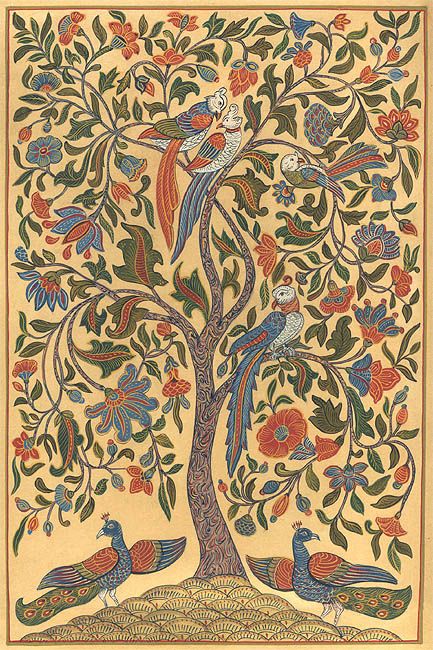
Kalamkari, meaning 'pen work' (kalam = pen, kari = work), is an ancient Indian art of hand-painting on cotton textile using natural dyes. The Srikalahasti style involves freehand drawing with a bamboo pen.
Emotional Qualities
History & Origin
Kalamkari has been practiced for over 3,000 years, with evidence found in Mohenjo-Daro artifacts. The art flourished under the patronage of the Golconda Sultanate.
Cultural Significance
Kalamkari textiles narrate mythological stories from the Ramayana, Mahabharata, and Puranas. The Tree of Life motif represents the connection between heaven and earth.
Technique
The Srikalahasti style involves 23 painstaking steps. The cotton cloth is first treated with myrobalan solution and buffalo milk. The artist draws the outline using a bamboo pen dipped in fermented jaggery and iron rust mixture.
Materials Used
Cultural Context
Kalamkari is one of the few surviving art forms that uses a completely natural dyeing process with organic mordants. The 23-step process has remained unchanged for over a millennium, making each piece a living link to the ancient world.
When This Art Form Works Best
Narrative storytelling commissions
Textile art and wall hangings
Mythological and epic scenes
Heritage and cultural institutions
How Our Artists Approach This Form
Our Kalamkari artists follow the ancient 23-step process with no shortcuts. Every line drawn with the bamboo pen is permanent — there is no eraser, no undo. This demands years of training and absolute presence.
Featured Works
Examples from our artists
Artists Who Practice This Form
Meet the masters keeping this tradition alive


Ready to commission a kalamkari piece?
Tell us about your story, and we will match you with the perfect artist.
Start a Commission